Showing posts with label religion. Show all posts

Wednesday, August 17, 2016

Book Review: Kabbalah: Key to Your Inner Power, by Elizabeth Clare Prophet


Kabbalah: Key to Your Inner Power
(Mystical Paths of the World's Religions)
Elizabeth Clare Prophet, Patricia R. Spadaro, Murray L. Steinman
Trade Paperback, 302 pages
Summit University Press
January 1, 1997
Judaism, Metaphysical, Mysticism, Nonfiction, Philosophy, Religion, Spirituality,Self Help, 
Theology, Theosophy

Book Synopsis:
This notable work explores the rich mystical tradition of Judaism, known as Kabbalah, and shows how to apply its extraordinary insights to one's own spiritual quest. It describes Kabbalah's Tree of Life and its theories on the creation, the origin of evil, the feminine aspect of God, the mysteries of the soul, and soul mates.



https://www.goodreads.com/book/show/1466307.Kabbalah


My Review

I've been interested in the Kabbalah for a very long time, although I have not read about it on a consistent basis. This book captured and held my interest throughout. The authors -- the main one being Elizabeth Clare Prophet -- quote from Kabbalistic texts such as The Zohar and the Sepher Yetzirah, as well as from the works of authors well-versed in the concepts of this fascinating mystical topic. The book is extensively annotated, which is something I greatly appreciated.

At first, I  wasn't sure about reading this book. Prophet was the head of a controversial New Age religion known as the "Church Universal and Triumphant", which is still in existence, although, from what I've read about it online, it does seem to be dwindling. It's basically been categorized as a cult. Even her own children have repudiated the church's teachings, and Prophet herself was mired in controversy during her lifetime, especially after her false prophecy about the coming of a nuclear strike on the U.S., back in the 90s. This so-called prophecy prompted the building of underground bunkers by the church, at the cost of millions of dollars.

I was therefore surprised by how much I enjoyed this book, in spite of the above, as well as in spite of some of the material included within its pages. 

Prophet doesn't limit herself to an analysis and explanation of the Kabbalah itself. She interweaves its insights with the teachings of her own church, which were heavily influenced by Theosophy. For those who are unfamiliar with this philosophical quasi-religion, it was founded by Helena Petrovna Blavatsky, a 19th-century Russian mystic. She claimed to be in contact with "Ascended Masters" who regularly gave her messages, which became the basis for her books. 

Later on, Alice Bailey continued to channel the Ascended Master teachings, as did Guy and Edna Ballard, of the "I Am" Movement. Various so-called masters have been identified, such as El Morya, Saint Germain, Kuthumi, and even Jesus.  Prophet and her late husband, Mark L. Prophet, incorporated these masters, as well as some new ones, into their own religious philosophy.

Prophet does do a creditable job of making this bogus New Age "theology" fit in with the teachings of Kabbalah, but only to a point. I did not like her inclusion of these teachings, which assert that we all have a "Holy Christ Self", as well as an "I AM Presence". As a Christian, I would have to say that these teachings are totally heretical. They imply, or sometimes even state directly, that we are all gods. Paradoxically, Prophet sounds like a solid orthodox Christian in many parts of the book. However, she categorically denies that Jesus Christ is the "only" Son of God. Instead, she affirms, as many New Age gurus do, that we mere humans can someday attain "Christhood". Of course, I found this very offensive, as she's totally denying the work of Jesus as Savior of the world.

Still, something about this book called out to me, so I began to read it.

At the beginning of the book, Prophet ties together the theory of The Big Bang with Jewish mysticism. This is nothing new, however, as another author, Migene Gonzalez-Wippler, has done the same thing in her own book about the subject, A Kabbalah for the Modern World, which was first published in 1974, and has gone through several editions. Still, it was interesting to read Prophet's take on this correlation. 

Prophet also traces the beginnings of Jewish mysticism from what is known as "Merkabah Mysticism", which is based on Ezequiel's vision of the Throne of God in the Old Testament. 

She then goes on to discuss the Tree of Life itself, the Shekhinah (this is the feminine aspect of God), the three parts of the soul, and several other topics, all of which I found totally fascinating. She also correlates the Sefirot (the emanations of the Tree of Life) with the Indian system of chakras, something that was also fascinating

I found the last four chapters of the book very satisfying, in the spiritual sense. In Chapter 7, which is titled "The Practical Path of the Mystic, the authors (as mentioned above, Prophet co-wrote this book with two other people) describe the process of emulating the virtues of each sepfirah (this is the singular form of the noun "sefirot") in our daily lives. Chapter 8, titled "Prayer and the Power of God's Names", deals with the combination of prayer and meditation. Chapter 9, "The Mystic Ascent", and Chapter 10, "The Creative Power of Sound", are also very spiritually satisfying. These chapters discuss a method of "ascending" on the Tree of Life through prayers directed to each sephirah, which are all aspects of God.

In short, this book presents a very beautiful, elucidating, and engaging presentation of the Kabbalah, in spite of its (the book's) basic shortcoming, in my opinion -- the mixing in of Theosophical concepts of "the Christ within" and the Ascended Masters. 

As with all of the books Elizabeth Clare Prophet has penned, whether alone or with other authors, this one is not only well annotated, but includes an extensive bibliography, as well. She references such Kabbalistic authors as Moses Cordovero, Gershom Scholem, who is the most important modern scholar on Jewish mysticism, Aryeh Kaplan, author of The Bahir, Daniel Chanan Matt, a modern translator of The Zohar, and Z'ev ben Shimon Halevi, a current teacher of the Kabbalah, who resides in England. 

For those interested in this ancient mystical philosophy and spiritual practice, this book offers much of value. Readers of different faiths can simply overlook those things they find jarring or even too ridiculous to accept, and plunge into the spiritual riches of the Kabbalah.

If I were to rate this book, I would give it four stars.


About the Author


 From Goodreads

Elizabeth Clare Prophet (née Wulf) (April 8, 1939 - October 15, 2009) was an American spiritual author and lecturer.

She was a modern-day mystic, author, lecturer and spiritual teacher. She has been featured on NBC's Ancient Prophecies, A&E's The Unexplained, and has talked about her work on Larry King Live. Her lectures and workshops have been broadcast on more than 200 cable TV stations throughout the United States.

Among her bestselling titles are Fallen Angels and the Origins of Evil, How to Work with Angels, Soul Mates and Twin Flames, Creative Abundance, Saint Germain On Alchemy, and Violet Flame to Heal Body, Mind and Soul.

Elizabeth Clare Prophet’s autobiography is entitled, In My Own Words: Memoirs of a Twentieth-Century Mystic.


Online Links


Monday, April 4, 2016

Book Review: Understanding Roman Catholicism, by Rick Jones


Understanding Roman Catholicism: 37 Roman Catholic Doctrines Explained
Rick Jones
Kindle Edition, 224 pages
Rick Jones (Print Edition formerly published by Chick Publications, October 1, 1995), November 18, 2013
Christianity, Nonfiction, Religion, Theology

Book Synopsis: Are Roman Catholics REALLY Christians? This eye-opening book examines 37 main Catholic doctrines, quoting from the official Catholic Catechism, then compares each doctrine with the Word of God. Written in a loving style, yet without compromising, this book clearly shows the eternal destiny of those who follow the pope of Rome. If you want to talk intelligently with Catholics about their salvation, you first must know what they believe. If you are like most Christians you will be shocked when you learn what Catholicism really teaches. Must reading for every Christian who knows or talks with any Roman Catholics.


https://www.goodreads.com/book/show/20922790-understanding-roman-catholicism


My Review

The title of this book is rather misleading, unless one reads the synopsis. The title leads the reader to believe that it's a concise, clear explanation of Catholicism for non-Catholics, or for those Catholics who would like to refresh their knowledge of Catholic doctrine. This is not the intent of the book, though. Instead, it's an exposition of Catholic doctrines that are in direct contradiction to Bible teachings. 

I think this is a pretty sneaky move on the part of the author, but I don't condemn him for it. Indeed, this little ruse might have drawn many an unsuspecting Catholic to the book, and have then perhaps stimulated them to question Catholicism. This is exactly what happened to me, although I had already begun to question my Catholic beliefs before coming across this book. However, it did help me to see exactly how Catholic doctrines were in total opposition to what is taught in the Bible. 

Jones uses the Catechism of the Catholic Church (1994 edition) and compares quotes from it side by side with Biblical quotes. He clearly shows how each Catholic doctrine differs markedly from what is actually taught in the Bible.  

The biggest contradiction is also the key concept of Christianity: salvation. Just how are we humans saved, according to the Bible, and according to the Catholic Church? Jones shows that, according to the latter, one must be a member of the Catholic Church in order to be saved. Furthermore, one must also perform "good works". 

In regards to salvation only through the church of Rome, Jones quotes: "For it is through Christ's Catholic Church alone, which is the universal help toward salvation, that the fullness of the means of salvation can be obtained." (Catholic Catechism, paragraph #816) Jone contrasts this with the following Biblical quote: "For whosoever shall call upon the name of the Lord shall be saved." (Romans 10:13, KJV) He also points out that Jesus repeats this message in John 3:16, 3;18, and 6:40. He also references Romans 10:9-10, in which Paul states that if one confesses out loud, and believes in one's heart, that Jesus rose from the dead, one will be saved. Jones mentions other verses, as well.

In regards to "good works", which include such things as baptism and the other sacraments, Jones emphasizes that salvation is a free gift of grace from God, and can never be earned through the performance of any type of "good works". He references Ephesians 2:8-9, as well as Titus 3:5, Romans 3:28, and Galatians 3:8 and 3:26. These are not the only verses he mentions, but they are the most important ones.

Each chapter in the book examines a specific doctrine, contrasting quotes from the Catholic Catechism with relevant quotes from the Bible. At the end of each chapter, Jones summarizes his point, and then challenges the Catholic reader to decide whether s/he will choose to believe God, as quoted from the Bible, or the Catholic Church.

The doctrines examined by the author in this book are precisely the ones that set apart Catholics from other Christian denominations. They are also the very ones that are huge points of disagreement between Protestants and Catholics. Some of these doctrines are: the Catholic Church is the one true church, baptism saves, the Pope is infallible, the sacraments save Catholics, there are venial and mortal sins, the bread and wine are transformed into the actual body and blood of Christ during the Mass, indulgences can help get souls out of Purgatory, and the Virgin Mary is Co-Redemptrix and Co-Mediator, together with her son, Jesus.

The entire book is laid out in a very straightforward, simple manner, with each Catholic doctrine clearly explained, and then juxtaposed with the Biblical teaching it contradicts.

Jones is a former Catholic himself, so he never talks down to or attacks Catholic readers. In fact, his tone is even loving and respectful. In spite of its simplicity, the book should be studied by any reader -- whether Catholic or not -- who would like to be better informed about the differences between Catholic teaching and what is taught in the Bible. 

Having stated all of the above, I would also have to point out that it seems to me that Jones has carefully selected the verses he uses, ignoring those that might be used by Catholics in support of the teachings of their church. For instance, in the chapter titled, "Confessing Sins to a Priest", Jones clearly leaves out a key verse used by Catholics in support of this particular doctrine: John 20:21-23 (KJV), which states the following: "Then said Jesus to them again, Peace be unto you, as my Father hath sent me, even so send I you. And when He had said this, He breathed on them, and saith unto them: Receive ye the Holy Ghost. Whose soever sins ye remit, they are remitted unto them; and whose soever sins ye retain, they are retained."

Clearly, the above verse is a powerful one to use in support of the Catholic doctrine of confessing sins to a priest. Why, then, does Jones fail to address it? True, he does give several verses that show that people in the Bible confessed their sins directly to God, but still, he should have addressed the verse above (as well as others that seem to justify the Catholic position). Just what did Jesus mean in this verse? What teaching was He attempting to convey?

It might seem that I'm either playing devil's advocate here, or trying to find ways to criticize the author of this book. However, what I'm simply trying to do is to remain objective, although I was raised in the Catholic Church myself. Tt seems to me that Jones could have done a more thorough job of refuting any verses that might be used by Catholics in counter-arguments with him. 

To summarize, although I do think that this book presents a very clear, easy-to-read exposition of the author's position, I don't think it goes far enough in proving that his position -- which is the one take by most Protestants -- is the only true one. Therefore, I would regard this book as a sort of primer for those who are beginning to question Catholic teachings. 

In this regard, I would like to read another book which  I believe will be a more thorough, more in-depth examination of this highly-important (to anyone interested in theology) issue. That book is titled The Gospel According to Rome: Comparing Catholic Tradition and the Word of God, by James G. McCarthy. I happen to own this book, so I will be delving into it in the very near future. Hopefully this book will clear up some of the issues that Jones's book has left unresolved in my mind.   


About the Author  


(from the Amazon Author Page)

 At the age of 20, while in the US Navy, Rick Jones thought he was a Christian because he belonged to a religion. But one warm August evening in Ventura, California, he learned the difference between religion and Christianity. His life was transformed when he received God's free gift of eternal life by trusting Jesus Christ by faith alone for his salvation.

Rick's life's calling soon came into razor-sharp focus - to help others find that same salvation. It began with Bible college, followed by six years at a Christian home for troubled teens. That calling continued during his years working at a Christian publishing company. It is also the thrust of the six books he has written, as well as his website.


Online Links


Tuesday, March 22, 2016

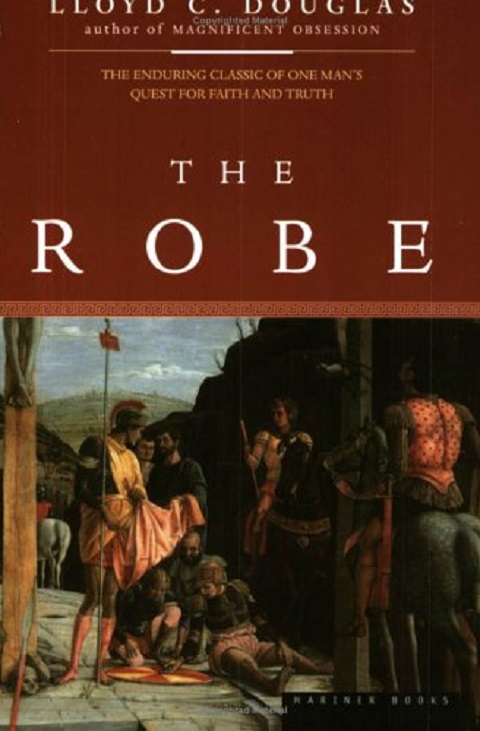
Tuesday Intros. No. 4: The Robe, by Lloyd C. Douglas


Welcome to First Chapter, First Paragraph Tuesday Intros,
hosted by Diane @

Every Tuesday, each participant
shares the first paragraph 
(sometimes two) from a book
they're reading,
or thinking about reading.


The book I've picked this week is...


 The Robe 
Lloyd C. Douglas
Trade Paperback, 508 pages
A Mariner Book
Houghton Mifflin Company    
April 7,1999
Christian Fiction, Classics, Historical Fiction, 
Religion, Spirituality 


https://www.goodreads.com/book/show/219919.The_Robe?from_new_nav=true&ac=1&from_search=true


About the Book
  
A Roman soldier, Marcellus, wins Christ's robe as a gambling prize. He then sets forth on a quest to find the truth about the Nazarene's robe-a quest that reaches to the very roots and heart of Christianity and is set against the vividly limned background of ancient Rome. Here is a timeless story of adventure, faith, and romance, a tale of spiritual longing and ultimate redemption.


Chapter 1

Because she was only fifteen and busy with her growing up, Lucia's periods of reflection were brief and infrequent; but this morning she felt weighted with responsibility.

Last night her mother, who rarely talked to her about anything more perplexing than the advantages of clean hands and a pure heart, had privately discussed the possible outcome of Father's reckless remarks yesterday in the Senate; and Lucia, flattered by this confidence, had declared maturely that Prince Gauis wasn't in a position to do anything about it.

But after she had gone to bed, Lucia began to fret. Gauis might indeed overlook her father's heated comments about the extravagances and mismanagement of his government, if he had had no previous occasion for grievance against the Gallio family. There was, however, another grievance that no one knew about except herself -- and Diana. They would all have to be careful now or they might get into serious trouble.


I read this great novel many years ago,
and it has left a lasting impression on me, so I want to re-read it.
Have you ever read this classic?
If so, what did you think?
If not, has the selection above
enticed you to do so?
I would love to know!


Saturday, December 19, 2015

Book Review: A Rabbi Looks at the Afterlife, by Jonathan Bernis


A Rabbi Looks at the Afterlife: A New Look at Heaven and Hell with Stories of People Who've Been There
Jonathan Bernis
Trade Paperback, 252 pages
Destiny Image Publishers, Inc.
November 18, 2014
Source: Family Christian Bookstores
Christianity, Judaism, Metaphysical, Nonfiction, Paranormal Studies, Religion, Theology

Book Synopsis:
People genuinely want to know if there is life after death. However, there are many different ideas about the afterlife. Some believe that once you are dead, “that’s it.” Nothingness. Others sincerely hope that there is something beyond this life, but are not sure. Uncertainty.

Is it possible to know that there is life beyond the grave? If so, how does this change your life today?

In A Rabbi Looks at the Afterlife, Jonathan Bernis takes you on an unforgettable journey of faith, exploring Scripture, history, and first-hand accounts of those who have experienced the afterlife.


https://www.goodreads.com/book/show/20256526-a-rabbi-looks-at-the-afterlife?ac=1&from_search=1


My Review

The topic of this book might seem morbid to some people, but I have been fascinated by it for a long time, having read a couple of books on the subject, by Raymond Moody and Elizabeth Kübler-Ross. However, these are secular writers and researchers. I had not come across a book written from the perspective of clergy from one of the major religions. Therefore, when I came across this one in a local Christian bookstore, it immediately caught my attention.

Bernis has penned a very interesting book indeed, one that will raise the faith of those who believe, and give food for thought to those that don't. His perspective is not only based on Judaism, but Christianity, as well, since he's a Messianic Jew. He is thus in a unique position to examine the beliefs of both religious traditions, and he does a very creditable job of it.

The book is divided into four sections. Part One contains the Introduction, as well as Chapters 1 and 2. Together, these give a general overview of the book. Part Two deals with heaven, and encompasses Chapters 3, 4, and 5. Part Three deals with hell, containing Chapters 6, 7, and 8. Part Four, which consists of Chapters 9 to 15, plus the Conclusion, is probably the most compelling part of the book, and is titled, "Those Who Have Gone Beyond the Veil".

It was the last part of the book, of course, that really drew me in, although the other sections also had material of great interest to me. The last part, though, has such incredibly fascinating stories!

The author first points out the following in his Introduction: "Most of the six billion people in the world today believe that life continues after death." (pg. 11) He then goes on to quote the famous Christian fantasy writer (who also wrote Christian nonfiction) C.S. Lewis, who, according to Bernis, "....is making an extremely strong case for the existence of a grand design -- and a Grand Designer -- behind the universe." (pg. 13) From this, Bernis goes on to briefly criticize the theory of evolution, as, in his view, it fails to explain how life evolves from non-life, and also discusses moral relativism and free will. 

Bernis begins Part Two with the observation that every culture throughout history has had a belief in a heaven or paradise. He cites the Vikings, Romans, and Egyptians, also mentioning Buddhist, Hindu, and Muslim beliefs about heaven.

Chapter 4 discusses Jewish beliefs about heaven. Christians are usually not aware that Judaism encompasses more than what Christians know as The Old Testament. In addition to these writings, there's the Talmud, which itself came from the Mishnah, the written version of the oral law. The Talmud is a detailed explanation of the commandments contained in the Torah (the first 5 books of the Old Testament). Bernis also explains that the Torah, Talmud, and other rabbinic writings comprise what is known as Halakkah. This is the overall content of Jewish law. 

Most fascinating to me in this chapter was the author's mention of a belief in reincarnation in Judaism. This comes straight from the Kabbalah, as well as several ancient rabbinic writings. 

As for who is qualified to enter heaven, and when the resurrection of the dead would take place, there has been a lot of disagreement among Jewish sages for centuries. Some of them, though, seemed to believe that even non-Jews would have a place in heaven. 

Christian views of heaven are outlined in Chapter 5. In the early stages, Christian beliefs were much like Jewish ones. Some early Christians believed that the body and soul were inseparable, and thus, both would go to heaven. Others insisted that, since all humans had sinned, human flesh was thus too corrupt to enter heaven. 

This chapter mentions the teachings of several early Church Fathers, such as Origen, Irenaus, and Justin Martyr. It also mentions The City of God, which details St. Augustine's view of heaven.

Bernis also points out that both Judaism and Christianity share the belief that humanity is separated from God because of sin. Additionally, Christians believe that God sent His son Jesus to redeem all humans from their sins. The author then points out that "...the single most fundamental truth of New Testament faith -- (is that) the way to eternal life is found through Jesus the Messiah and him alone." (pg. 194)

Several contemporary Christians mentioned by Bernis in this chapter, such as John McArthur, firmly assert that we will be totally free from sin and other corruption in heaven. C.S. Lewis stated that we would all keep our earthly personalities in heaven, as does Randy Alcorn, who answers many questions about heaven in his book of the same title.

Part Three opens with a general look at the belief in hell. Bernis admits that he would prefer it if no such place existed, but affirms that it does. He then references Dr. J.P. Moreland, a professor of philosophy and ethics, and author of the book, Beyond Death: Exploring the Evidence for Immortality, according to whom hell is "...something God was forced to make because people chose to rebel against him and turn against what was best for them and the purpose for which they were created." (pg. 126, Lee Strobel quoting Moreland in The Case for Faith, pg. 175) 

Bernis then goes on to state that ancient cultures also had a belief in hell, although the Egyptians, for instance, did not have a doctrine of eternal punishment. Classic Greek mythology mentions a place known as Tartarus, where, Plato stated, souls were sent after being judged for their deeds on earth.

In Bernis's discussion of Jewish and Christian beliefs about hell, I was surprised to discover some differences between the two religions. For instance, Jewish belief did not unanimously include an eternal hell, whereas Christian belief always has.

Chapter 7 details Jewish views of hell, mentioning that ancient Jews called it Hades, a name which was borrowed from the Greeks. However, this place was not seen as anything but the abode of the dead. Later on, it was known as Sheol.

Bernis stresses that Jews have long believed in a place where humans who have passed on are separated from God and His blessings. He cites several Bible verses from the Old Testament that refer to this.

Another term used for hell is Gehenna, which actually refers to the Valley of Hinnom, just south of Jerusalem. This valley has a rather sinister history, as human sacrifices took place there in ancient times. The name eventually acquired the characteristics of an eternal place of punishment, although some Jews believed that it was instead a place of rehabilitation for souls ultimately destined for heaven. 

Yeshua -- this is the Hebrew name of Jesus, which is used by Messianic Jews -- firmly stated that Gehenna is a place of eternal punishment.

In Chapter 8, which details Christian beliefs about hell, Bernis again mentions early Church Fathers. He also references the Apostles' Creed, which can be traced back to the 4th century, A.D., part of which mentions that, before His resurrection, Jesus descended into hell.

Bernis also refers to recent criticisms about the existence of hell by some Christians. Michigan pastor Rob Bell, in his book, Love Wins, challenges the traditional Christian belief in hell. The late theologian Clark Pinnock also questioned its existence. Surprisingly, even the Catholic Church has altered its definition of hell. In 1999, Pope John Paul II declared that hell is not a place of eternal punishment, but is really a condition, brought about by our own attitudes and actions. In so stating, the then pope denied the traditional Christian view of divine judgment.

Contradicting all of the above, Bernis cites Christopher W. Morgan, who co-authored the book Hell Under Fire with Robert A. Peterson: "...the future punishment of the wicked in hell is a significant theme in the New Testament."

In the fourth part of the book, Bernis recounts the true-life stories of six people who have actually experienced the afterlife: Howard Storm, Dr. Gary L. Wood, Don Piper (famous for his book, 90 Minutes In Heaven), Bill Wiese, Curtis "Earthquake" Kelley, and Dean Braxton.

As I stated above, this part was absolutely fascinating and riveting! I actually jumped to it in the middle of the book, read it in its entirety, and then went back later to where I had left off. 

Three of the men listed above -- Storm, Wiese, and Kelley -- experienced the torments of hell, while the rest experienced the bliss of heaven. Each one describes his experience in detail. Wiese, for instance, screamed in such anguish one night, that his wife woke up. She found him on the floor, shaking and asking her to pray for him. His was not an NDE, though, but a vision. 

The men who experienced heaven have equally vivid stories to tell. Wood, for example, mentions clapping trees and singing flowers, and says that everything in heaven praises and worships God. Piper mentions a joyful reunion with loved ones, including his grandfather, who had died suddenly from a heart attack. And Storm tells of being rescued by Jesus as demons relentlessly attacked him.

Piper was already a pastor when he had his NDE experience, but most of the others were not living good Christian lives. After their experiences -- and this is especially true of the men who saw hell and/or were attacked by demons -- their lives totally changed, and they firmly committed to God. It was so inspiring to read about this type of thing!

I am very glad to have read this book! It has reaffirmed some things I had begun to doubt, and has really lifted my spirits, as the hope in and love of God have become more evident to me. What I especially like here is the author's combination of apologetics -- through a presentation and explanation of traditional Judeo-Christian beliefs about the afterlife -- with the stories of six men who have gone there and returned to tell others about it.

I do think I need to re-read this book at some future point, as I'd like to thoroughly study its theological aspects. Unfortunately, Bernis doesn't provide a bibliography, although the book is extensively annotated, and he does give the titles of books he has consulted. Still, I think a bibliography would be most useful. 

The comment above is just one small issue I have with this book. Overall, I thought it was an excellent, highly interesting read, and one written in a simple, straightforward style that I had no trouble following, although the ideas and doctrines presented are deep ones. 

This book is perfect for Messianic and Christian laypeople, as well as for the theological student who might want a concise exposition of Biblical views on it, along with true-life stories that serve to strengthen the faith.

I don't give actual star ratings on this blog, but, if I were to do so, I would definitely give this book five stars! It's now a part of my 'Favorites' shelf!    


About the Author


Jonathan Bernis is an influential Messianic Rabbi, as well as President and CEO of Jewish Voice Ministries International. This is a Messianic Jewish non-profit organization, with branches in Canada and the UK. Its mission is to spread the Gospel of Yeshua (Jesus in Hebrew) to the Jewish people. This organization provides humanitarian aid to impoverished Jews around the world. It has also set up Messianic congregations in different parts of the world.
In addition to his leadership in the Messianic movement, Rabbi Bernis has written several books, such as A Rabbi Looks at Jesus of Nazareth, A Rabbi Looks at the Last Days, A Hope and a Future, and Etz Chaim: Tree of Life.
Rabbi Bernis is also an international speaker and TV personality. He lives in Phoenix, Arizona, USA, with his wife, Elisangela, and their two daughters.
(Source: Wikipedia)