Showing posts with label YA. Show all posts

Friday, March 9, 2018

Book Blogger Hop No. 7: Classics Retellings


Welcome to the Book Blogger Hop,
hosted by Billy @


For more information, and 
to find out the topic of next week's question, click HERE.


This Week's Question

Do you enjoy reading retellings of,
or 'sequels' to, classic novels?
Why or why not?

(Submitted  by Maria @ 


My Answer

Actually, I haven't read many of these, but if I were to read more, it would totally depend on how well they were written, and how skillfully the modern authors had incorporated the classic authors' story and characters into their own books, while creating something original at the same time. 

In September of 2015, I purchased and decided to read a 'prequel' to Jane Eyre. This 'prequel' is very well-known, and is considered to be a masterpiece, although the Goodreads reviews are far from being overwhelmingly favorable. I'm referring to Wide Sargasso Sea, by Jean Rhys.

I bought an edition with a very beautiful cover (see below), and settled in to read, only to begin feeling.....well, 'very distressed' would be an adequate description. This novel tells the story of 'the madwoman in the attic', a very important character in  Charlotte Brontë's famous novel. Rhys's intent was to vindicate this character, as well as to explore the ways in which women in the 19th century were oppressed by the patriarchy. She also brought in colonialist criticism. In order to achieve these ends, however, she totally revamped the character of Edward Rochester, the male protagonist of the  Brontë novel. The extent to which she did so makes him totally unrecognizable. Thus, I gave up reading Rhys's novel in disgust. In her hands, Rochester had actually become a caricature of the character originally -- and masterfully -- created by Brontë  . 


Click on this cover for the Goodreads page.

https://www.goodreads.com/book/show/481558.Wide_Sargasso_Sea


I strongly feel that, if a modern-day author is going to use characters previously created by another author, and especially a classic one, then they should do their utmost to remain faithful to the original characterizations.

It's interesting to note one thing: all of these 'retellings' and 'sequels' (or 'prequels') actually fall under the category of fan fiction. This makes me wonder whether the authors of the original books, were they alive today, would be upset that their creative masterpieces are being 'recycled' by contemporary authors. I would guess that they would, indeed, be upset, although perhaps in varying degrees, according to how their original works were being used. I think that the acclaimed author of Jane Eyre would have a thing or two to say to Rhys about Wide Sargasso Sea, since the latter has so drastically distorted the original version of Rochester! 

There's a YA novel I want to read, titled My Plain Jane, and written by three authors, which I feel might do more justice to the original. It's supposed to be a humorous take on Jane Eyre, and is set to be published on June 26th of the present year. However, if I'm at all disappointed by the authors' handling of the original material, I will not hesitate to state it in a review. I'm crossing my fingers that this won't happen, though!
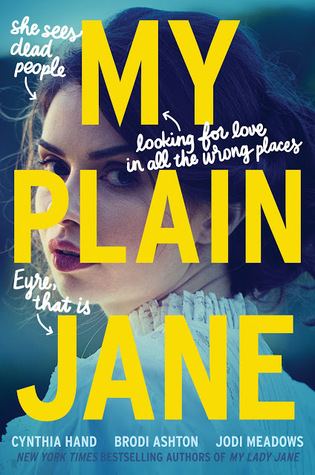
  

Click on the book cover for the Goodreads page.

https://www.goodreads.com/book/show/36301023-my-plain-jane


One particular type of retelling, or 'sequel', really does annoy and anger me, as I find it to be a total travesty of the original, and thus, very disrespectful to the original author. This is the type of novel in which the original book's text is actually interspersed with outrageous material that's totally extraneous to the original work. I think this type of book is just not worth reading at all! I'm thinking of such 'gems' as Jane Slayre and Pride and Prejudice and Zombies (UGH, UGH, UGH). For a list of Jane Eyre retellings and 'sequels', click on this Goodreads list. I think I would probably enjoy other books on this list.
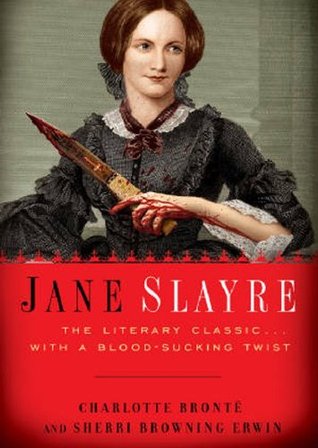

    Click on the covers for the GR pages.        

https://www.goodreads.com/book/show/7430962-jane-slayre


https://www.goodreads.com/book/show/5899779-pride-and-prejudice-and-zombies?ac=1&from_search=true
      

It's not a matter of whether or not one likes zombies, vampires, werewolves, and other creatures common to paranormal fiction. It's a matter of reading 'derivative books' that actually destroy the original work through the introduction and interspersion of material totally foreign to it and thus, to the author's original intent in writing their masterpiece.

There are other Pride and Prejudice rettellings and 'sequels' that I know I would probably enjoy, such as the ones on this Goodreads list

There have been several retellings, etc. of the adventures of Sherlock Holmes, who happens to be my favorite detective of all time! I have only read one, a YA novel titled A Study in Charlotte, by Brittany Cavallaro. This was a brilliant spinoff of the original adventures, and I enjoyed it immensely! In it, the detective is Charlotte, a descendant of the legendary Holmes, while her assistant is Jamie, a descendant of the famous Dr. Watson. 


Click on the cover for the Goodreads page. 


https://www.goodreads.com/book/show/23272028-a-study-in-charlotte?ac=1&from_search=true
         

There have probably been many more retellings or adaptations of classic novels that I'm not aware of; the ones shown above are the ones I've heard of. It seems to me, though, that Jane Eyre and Pride and Prejudice are the two classics that have been 'retold' the most. That's probably because these two novels are the ones most loved by generations of female readers, and the authors of these retellings are all women. 

I would be more than willing to read any of these which, again, are skillfully done, and in some way remain faithful to the originals, while also remaining respectful of them. I am definitely not interested in reading any such books which totally disrespect, destroy, or make fun of the original classics, unless, of course, the humor is meant as an affectionate take on the original work.


What are your thoughts on
this topic?
If you're participating in this hop,
I'll go comment on your 
own BBH post.
If not, I will then comment on one 
of your blog posts!
Thanks for visiting!!!  


Saturday, April 29, 2017

Book Blogger Hop No. 3: Books I Have Re-read


Welcome to the Book Blogger Hop,
hosted by Billy @


For more information, and 
to find out the topic of next week's question, click HERE.


This Week's Question

How many books have you re-read? If you have re-read books, please tell us the book titles and why you re-read them.

(Submitted  by Elizabeth  @ 


My Answer

There are several books I have re-read throughout the years. Although subsequent readings cannot compare with that first reading, I have still enjoyed each book -- or not -- just as much the second time around.

Since there are quite a few books I've re-read, I will just highlight a few. 


https://www.goodreads.com/book/show/2888213-the-twilight-saga


The first books that come to mind are those of The Twilight Saga, by Stephenie Meyer. As regular readers of my YA blog A Night's Dream of Books,  know, I LOVE this series!! I've re-read all four novels three times each, and the first novel four times -- one of them in Spanish, since I'm fluent in that language. 

I love the characters of these novels, especially Edward Cullen and Bella Swan! Although some people might dislike the books because they think the romance between Edward, a vampire, and Bella, a human, is just too 'weird' and 'out there', let me assure those of you who have not read these books that they're beautiful, romantic, and full of teen angst and great paranormal action! But there's more to them than this. They also have themes of loyalty, courage, and the determination to live a life of non-violence.


https://www.goodreads.com/book/show/6712426-wuthering-heights

 
Another book I've re-read (twice, unbelievably enough) is Wuthering Heights, by Emily Bronte. In my last Book Blogger Hop post, I expressed just how much I detest this novel, so I won't repeat myself here. Reading -- as well as re-reading it -- was not a pleasant experience by any means.


https://www.goodreads.com/book/show/161106.Jane_Eyre


What a contrast is Jane Eyre, by Charlotte Bronte!! This novel is my all-time favorite classic!! I've read it twice, as well, and gained some new insights the second time, too. I have admired Jane for many years, and only wish I could be half the person she is. Her strong determination to live her life on her own terms, according to her inner moral compass, and not the dictates of the society of her time, is truly an example. Furthermore, her romantic relationship with Edward Rochester is tumultuous and passionate, which makes for great drama!


I've also re-read Pride and Prejudice, by Jane Austen. The first time I read it, I was a high school student, and found it just as boring as I found Jane Eyre exciting. Of course, these two writers -- Charlotte Bronte and Jane Austen -- had very different personalities. I much prefer Bronte's novel because she created dynamic, passionate characters, as well as very dramatic scenarios. Austen's novel, in contrast, was of a more subtle type. This author was concerned with satirizing the accepted conventions of the society of her time, and in a slyly humorous way. There was no "sturm und drang" in this novel.  

During my second reading, I was better able to appreciate Austen's sly humor, as well as her astute characterizations. However, I will always prefer Jane Eyre!


https://www.goodreads.com/book/show/16635.Magister_Ludi?ac=1&from_search=true


Another book I've read twice is Magister Ludi, by Hermann Hesse. This novel is also known by the title The Glass Bead Game. What's fascinating about it is the intellectual nature of this fictitious game, although Hesse never does elaborate on just how it's played. Equally fascinating is Hesse's creation of an intellectual province, known as "Castalia". I would love to be able to live in such a province!

This is not a dramatic novel at all, and the action moves quite slowly. I liked it, though, because the main character, Joseph Knecht, goes through a very compelling series of changes, all of an intellectual as well as emotional nature, throughout the novel. At the end, he has become transformed into a person who is able to appreciate both the intellectual life, and the life of the senses. This was one of Hesse's major themes, too.

I think I'd like to go back for a third reading of this novel! I'm sure there are many more things about it that I will be able to appreciate.


https://www.goodreads.com/book/show/12873.Rebecca


Another novel I've read twice is Rebecca, by Daphne du Maurier. I was enjoying it the second time just as much as the first, until I found out what had really happened with one of the main characters. I don't know why, but I had not remembered this detail from my first reading, years ago. Instead, I had remembered what happened in the movie version. Interestingly, it seems that my mind had surreptitiously substituted the events of the movie version, precisely because the way the plot developed in the novel had disgusted me. The whole thing involved a murder, and how this murder was covered up. In the movie version, there was no murder.

This curious incident has made me realize just how complex the workings of the mind are. Our memories are not always reliable in recording exactly what took place in our past. We remember some things as we wish they had taken place, and not as they really did. Hmmmm.....

So these are some of the books I've re-read. There are several more, but, in the interests of not making this post overly long, I will stop here. Lol.

I'm very interested to know what books other hop participants have re-read, and why!


What are your thoughts on
this topic?
Please leave a comment!
If you're participating in this meme,
I'll go comment on your 
own BBH post.
If not, I will then comment on one 
of your blog posts!
Thanks for visiting!!! 


Monday, April 18, 2016

The Cozy Book Corner No. 4: 'The Book Hangover' and Some Perpetrators Thereof


Welcome to my Monday feature!


Note
I have moved this feature
from Friday to Monday.

In each weekly post, I explore 
my thoughts on several 
book-related topics.


The idea of 'the book hangover' is nothing new; it's been familiar to readers for years. In fact, I have found some blog posts dedicated to this topic. At some point in the past, an anonymous, and clever, bookworm came up with this term, and it  is a very appropriate -- as well as funny -- one to describe the state of mind of a reader who has just finished a book which has totally and irrevocably captivated them.

Since there are two broad classifications for books -- fiction and nonfiction -- I will first discuss the symptoms of the hangover in the case of fiction. 

Depending on how much a reader has enjoyed and, most importantly, identified with, the characters, setting, plot,  and prose style of the book, this state of mind can range from one of mild irritation that the book has been completely read, to one of total, stubborn denial of that irrefutable fact. A given reader might be absentminded for a few days, while their mind constantly replays scenes from the book. Another reader might fall into a bad mood that will also last days, and which nothing will take away, not even the normally enticing prospect of reading another, possibly even more exciting, more fascinating novel. Then there's the case of the true addict. This person will simply lie in bed, staring off into space, and refuse to get up except when absolutely necessary. If forced to do so by a concerned relative or significant other, they will comply like a lifeless zombie or robot; it's as if they were actually not in their body. If prodded, they might say something that a character in the book would say, which indicates that, indeed, they are not in their body, but inside the book, and even living through the plot. 

It seems that the only cure for any of these types of hangovers -- especially the last one -- is to simply re-read the book that caused this agonizing condition. However, a re-reading will never be the same as a first reading; things will just not be fresh and new for the sadly afflicted reader. Re-readings are usually most effective when some time has gone by. In cases of extreme hangover, though, this might be an intolerable proposition to the 'hangoveree'. In such cases, nothing but total immersion will do. The effects are usually immediate, and very noticeable to observers. The reader's eyes lose that tell-tale glazed look, the person regains their composure, and is able to return to normal activities, as long as, of course, these don't interfere with their rapt re-imbibing of the beloved tome that caused the symptoms in the first place.

While I have never been as severely affected as the reader in the third hypothetical scenario above, I have gone around in a sort of sulky funk whenever I've finished reading a novel that I loved SO much, I never wanted it to end.... This has been especially the case with book series, although it's also happened with stand-alone novels. How have I gotten over these 'book hangovers'? I simply have let them run their course. While in this frame of mind, I have not been able to start another novel. I haven't even been able to pick up a nonfiction book, instead. So this means I simply haven't read anything at all for several days. Perhaps I won't be able to do so for at least two weeks, or more....

Nonfiction books are a bit different. They don't usually give me hangovers per se, simply because there are no memorable characters to fall in love with, no fascinating plots full of twists and turns to keep me glued to the book. Nonfiction books, if they carry a heavy impact, are actually meant to give a reader a hangover, but of a far more pleasant type. In the first place, the reader might not read them at a frantic gallop, because, in many cases, these books are supposed to be pondered. This is especially so with books of philosophy or literary criticism, for instance. Psychology books, whether academic or self-help, are also meant to be pondered, and, in the case of the second category, often contain exercises the reader is supposed to go through. Books on theology also fit the description. Perhaps history books do not lend themselves as much to pondering, but then, it depends on the author's theme.

In short, nonfiction books do not generally cause a reader extreme suffering when they are finally read. They will, of course, linger in the reader's mind, but this lingering will be one that is actually welcomed by the reader. At least, such has been my own experience. I will sometimes go back to these books in order to re-read and absorb favorite passages. At other times, I wlll return to passages which have actually angered me, as I am in disagreement with the author. In one case, I even wrote some very strong rebuttals in the book's margins, thus breaking one of my own sacred rules regarding books -- NO writing allowed in books! It didn't matter in this case, though, as I owned (and still own) a second, unsullied copy of this very same book.

As for advice in getting over a 'book hangover' related to fiction, I say the best thing is to let some time go by. Do not attempt to immerse yourself in another novel's fictional world until you feel you are totally ready, until you have completely gotten over the 'loss' of the read novel's world. Do pick up the beloved novel you have just finished, look longingly at it, and perhaps give it a loving caress. You can even hug it if you like. Then put it back on the shelf. If this is too stressful for you, then just carry it around with you everywhere you go. Open its pages and take a whiff every so often. Perhaps re-read a favorite passage at lunchtime. Laugh over it, or cry over it (as the case may be), as you read. Just be careful not to get carried away, if you're in public. I would thus recommend you drink some soothing tea as you read, if you're at lunch. During working hours, you won't be able to dip into the novel, of course, but, if possible, you can, from time to time throughout the day, unobtrusively open the desk drawer you've hidden it in, giving it a little pat, along with a fond smile.

After following the above procedures for a few days, you will probably have desensitized yourself to the novel enough to then start another one.

If the above suggestions don't seem to help, then just give in and re-read the whole book. It's not worth it to go through such agony!

Again, with nonfiction books, the torture of the hangover is practically non-existent. However, if you really love the book, then the above tokens of affection toward it can accompany any subsequent dipping into it, and will make these re-readings much more pleasurable.

Now here is a partial list, in no particular order, of books that have given me this condition which is so common for us bookworms:

Fiction

Classics

Jane Eyre - Charlotte Bronte
My Name Is Asher Lev - Chaim Potok
Narcissus and Goldmund - Hermann Hesse
The Hobbit - J.R.R. Tolkien
The Lord of the Rings - J.R.R. Tolkien
Crime and Punishment - Fyodor Dostoyevsky
Treasure Island - Robert Louis Stevenson
To Kill A Mockingbird - Harper Lee
A Tree Grows In Brooklyn - Betty Smith
The Jungle Book - Rudyard Kipling
A Tale of Two Cities - Charles Dickens
Oliver Twist - Charles Dickens
Victory, by Joseph Conrad

Popular Fiction -- All Young Adult

The Twilight Saga - Stephenie Meyer
The Harry Potter series - J.K. Rowling
The Vampire Academy series - Richelle Mead
(fortunately, she has a spinoff of this series, but it's not quite the same...)
Of Beast and Beauty - Stacey Jay
Spellcaster - Claudia Gray

Nonfiction

The Story of Philosophy - Will Durant
From Socrates to Sartre - T.Z. Lavine
Personal Power Through Awareness - Sanaya Roman (this is the one I had some disagreements with)
A Kabbalah for the Modern World - Migene Gonzalez-Wippler
Daily Guidance From Your Angels - Doreen Virtue


For further information on identifying and dealing with this all-too-common literary affliction, please consult:


Book Hangover Memes @ ermilia (This post presents some pictorial descriptions of the condition.)


What are your thoughts 
on this subject?
Which books have given you 'a book 
hangover'? How did you come
out of it so that you were able
to start another book?